2026
PhD Candidate in Computer Engineering · Polytechnique Montréal & Mila
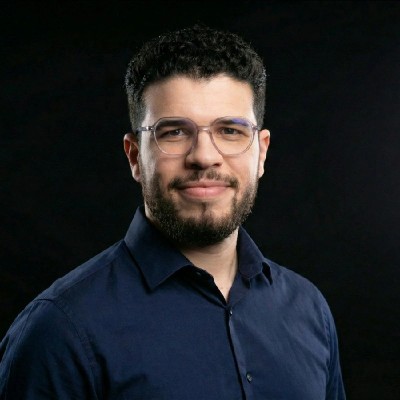
Anas Dorbani
Building the next generation of intelligent data systems — where AI meets databases.
Montréal, Canada
A PhD candidate at Polytechnique Montréal, Université de Montréal & Mila - Quebec AI Institute, working on agent-first data systems for multimodal data management. My research focuses on deeply integrating large language models with database systems and building efficient execution engines for analytical and semantic queries.
Data & AI SystemsAgent-first Data SystemsMultimodal Data Management
02/Background
Education

January 2025 - Present
PhD in Computer Engineering
Polytechnique Montréal, Université de Montréal & Mila -- Quebec AI Institute · Montreal, Canada
- Thesis Topic
Agent-first Data Systems for Multimodal Data Management
- Advisor
- Research Lab
September 2019 - July 2024
B.Eng. in Computer Engineering & Classes Préparatoires
École Nationale Supérieure d'Informatique et d'Analyse des Systèmes (ENSIAS), Université Mohammed V & Lycée Mohamed V · Rabat, Morocco
- Thesis
Automated Metadata Generation for Heterogeneous Enterprise Datasets
- Supervisor
- Industry Collaboration
03/Career
Experience

February 2024 - July 2024
Oracle Labs
Research Engineer, Intern · Data Integration Team
Casablanca, Morocco
Designed a low-cost pipeline using 7B models to generate database schemas from heterogeneous compliance documentation. Addressed small-model limitations through fine-tuning and a correction stage with automated quality checks, increasing accuracy from 40% to 60% in human evaluations and introducing a scalable evaluation framework.
June 2023 - August 2023
Oracle Labs
Research Engineer, Intern · AutoMLx Team
Casablanca, Morocco
Optimized local and global feature-importance explainers for automated model training, reducing latency by 80% and average memory usage from 20 GB to 4 GB. Improved system reliability through critical bug fixes and increased code coverage by 6%.

July 2022 - August 2022
National University of Rabat
Research Assistant · ICT Lab
Rabat, Morocco
Collected a testing dataset by scraping RFID reader coverage and pricing details from vendor manuals. Trained a deep-learning model for error detection and repair with 92% accuracy, then designed a collaborative interface for users and vendors to correct data-quality issues.
04/Academia
Teaching
INF3710Files and Databases
Polytechnique Montreal
- — Fall 2025 - TA for Prof. Amine Mhedhbi
- — Winter 2026 - TA for Dre. Franjieh El Khoury
Introduction to files and databases: needs analysis via the entity-relationship model; relational model and relational algebra; SQL DDL/DML and embedded SQL; concurrency control and transaction management; relational schema design (functional dependencies and normal forms); storage models and file structures; indexing and hashing.
05/Recognition
Awards & Grants
2025
VLDB 2025 Travel Award
VLDB Endowment
Funding support to attend the VLDB 2025 conference in London, covering travel, lodging, and registration.
2022
Mega-Hackathon - 3rd Place, MedTech
Orange Digital Center
Placed third in the MedTech category for a collaborative application connecting blood donors with urgent local requests.
06/Open Source
Projects
FFX
October 2025 - Present
Led and built the core semantic execution engine for LLM-powered relational queries. Implemented semantic llm_map operators over factorized joins, cutting input tokens by up to 15.67x, and scaled batches to 2,048 by compressing repeated values and expanding combinations on demand.

September 2024 - Present | 350+ GitHub stars | 1K+ downloads/week
Created and lead this LLM-powered query engine, spanning research, development, and releases. Built eight LLM map/reduce operators plus reusable, versioned PROMPT and MODEL SQL resources, achieving up to 7x query speedups and 48x embedding speedups through dynamic batching, caching, and deduplication.

March 2024 - August 2024 | 82K+ GitHub stars
Served as a core maintainer for agent execution, failure recovery, and evaluation infrastructure. Designed an iterative refinement loop that used execution feedback to revise failed actions from small models, and reimplemented the SWE-Agent benchmark in a shared evaluation pipeline.